
India’s Quest for Solar Exploration- All about Aditya L-1

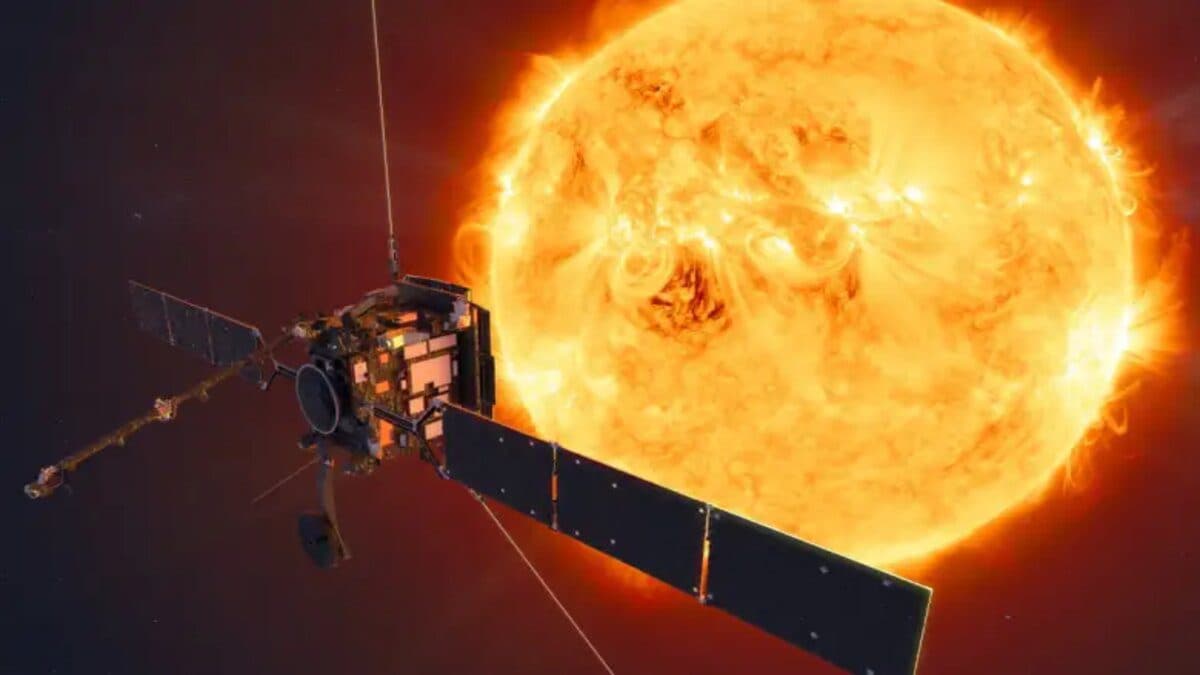
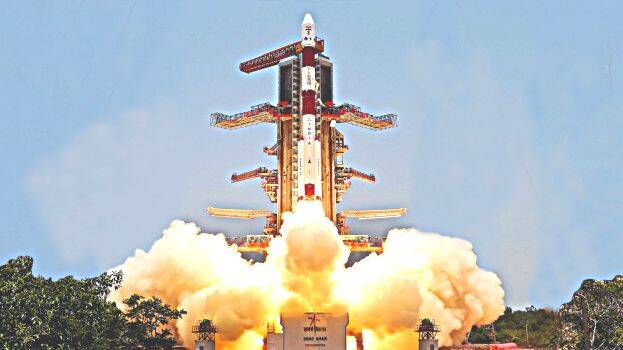
In a sunshine state of mind, India is one step closer to the Sun with the Aditya L-1 spacecraft after conquering the Moon’s South Pole with Chandrayaan-3. Aditya L1 is a coronagraphy spacecraft, which was designed by the Indian Space Research Organisation (ISRO) and was launched on September 2, 2023, from the Satish Dhawan Space Centre in Sriharikota, in a bid to know more about the Sun and the secrets it holds.
It does that not by venturing closer to the Sun or by direct contact, but from a distance of 1.5 million km from Earth to study more about the Sun’s outer atmosphere. This is done through coronagraphy spacecraft, which, simply put, are spacecraft with devices that block out the light from the primary source in order to learn more about objects that wouldn’t be visible normally in the Sun’s glare. Fun fact: the name of Aditya L1 was earlier Aditya 1, but was changed because the L1 in the name stands for Lagrange point 1, which indicates the location or the point where the spacecraft is set to be located between the Sun and the Earth. This is because these Lagrange points are points between the Earth and the Sun where the gravitational pulls from both of these are evenly matched and balanced. It is a mission of 125 days, and the spacecraft carries 7 payloads, with 4 looking at the Sun from far away, and the remaining 3 devices looking at the Sun from a closer point of view.
All these 7 payloads are developed and manufactured indigenously by various scientists and engineers in close quarters with ISRO centres across India. These production centres are located in Pune, Ahmedabad and Bangalore. Given the environment the spacecraft will be subjected to, it is built like a refrigerator; i.e it is dense and heavy, but does not occupy much space. This is to ensure that the spacecraft withstands any hazards that it may encounter, such as an asteroid storm. In space, it is powered through highly advanced solar panels and batteries, coupled with a camera that can take high-resolution pictures of the Sun, to further the research process. Along with these cameras, the payloads also include technologies for particular areas of the Sun such as the photosphere, corona and chromosphere, for a detailed collection of data.
But you may wonder why so many payloads, and what there is to learn about the Sun. We know it’s a hot star (pun intended), and it is essential for the existence of life forms in this huge galaxy and our little blue planet. Well, the payloads include electromagnetic and particle detectors to study less-known but fascinating aspects of the Sun such as coronal heating, pre-flare and flare activities, how dynamic the space weather is and what role the Sun play in it.
This whole project costs roughly Rs 1500 crores, and the team was led by Nigar Shaji, who was the project director for Aditya L1 and Sankarasubramanian. K, the principal scientist for the project, is well renowned for his contribution to the modern Indian space journey through his contributions to various missions across ISRO, including Chandrayaan-2. Along with this, the team included multiple people such as engineers, payload scientists and data analysts.
Related Blogs Aerospace Engineering:
Average Aerospace Engineer Salary In USA 2023
Sounds interesting, right? Some courses that you can pursue are an M.Tech in Electronic and Computer Science, a PhD in Physics, a bachelor’s degree in Aerospace Engineering, or a B.Tech in Avionics Engineering; the sky is the limit. Top colleges worldwide offer these courses, such as Imperial College London, the University of Sydney, MIT, and the University of California, Berkeley, among others, so you can gain knowledge and become part of ISRO one day. If you think you can do it, contact Admissify to make your study abroad journey easier, as they offer end-to-end consultancy services for all your foreign education needs!
Admissify wishes ISRO and the Aditya L1 team the best of luck for India’s first solar space mission! We hope to see the young minds reading this make even better strides towards their space exploration journey with the help of Admissify!

Avneet
Avneet Kaur is a dedicated writer with a profound commitment to enhancing education across the globe. Through her insightful blogs and articles, she aims to help students achieve their goals by exploring all aspects of learning and introducing new approaches to education. In addition to her focus on education, Avneet has a keen interest in digital media, continually exploring its potential alongside her writing and academic pursuits. Her diverse experiences and innovative ideas are making a significant impact on the way education is perceived and delivered worldwide.